
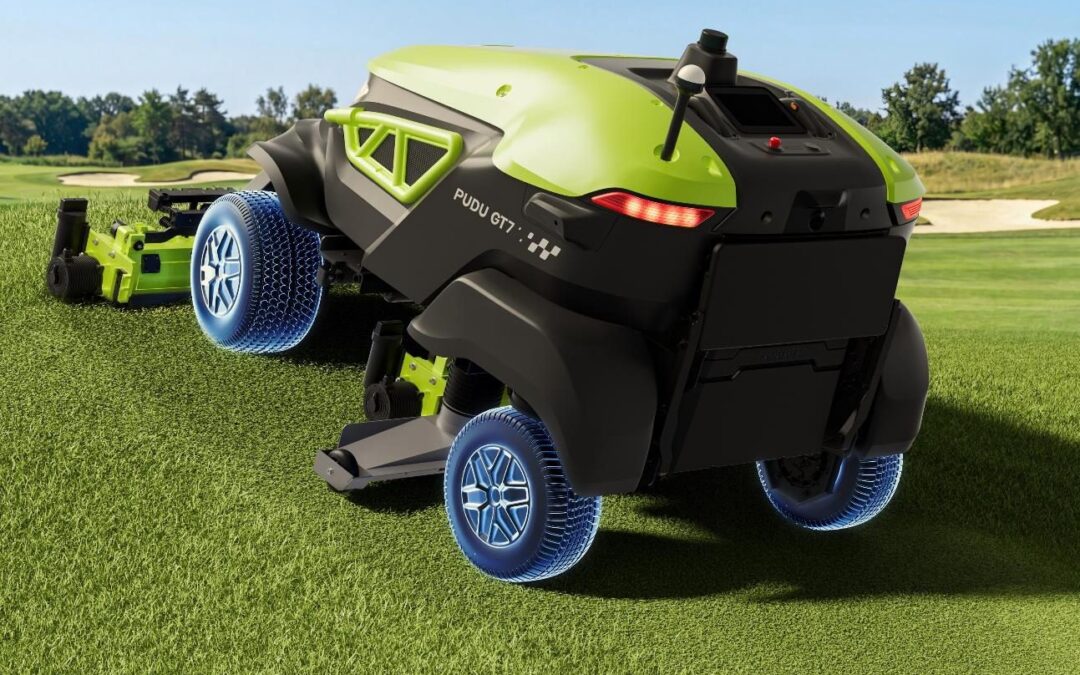
Anyone researching robotic mowers for a large site quickly runs into the same handful of names. Husqvarna, Mammotion, and Kress come up constantly in search results and AI answers, and Greenway Robotics sits alongside them as a UK supplier built specifically around commercial and large area turf. This robotic mower comparison sets out how to weigh all four fairly, focusing on what actually matters for golf courses, sports clubs, holiday parks, estates, and municipal grounds rather than brand familiarity alone.
Not sure which supplier suits your site? Talk to Greenway Robotics for a free consultation, or see our full range of commercial robotic mowers before you compare.
Why comparing brands is harder than it looks
Comparing robotic mower brands is rarely a like for like exercise. Each supplier started from a different place, serves a different mix of customers, and builds its range around different assumptions. A buyer looking at a modest domestic garden is solving a very different problem to a greenkeeper responsible for acres of fairway, and a comparison that ignores that difference tends to produce a misleading answer.
The most useful way to approach it is to separate the questions. First, what kind of site do you actually have? Second, which suppliers build their range around that kind of site? Third, how good is the installation and support behind the machine? Brand recognition only really answers none of these on its own.
Husqvarna: the familiar name
Husqvarna is one of the best known names in robotic mowing, with a long heritage in garden and outdoor power equipment and a range that spans from domestic lawns through to larger commercial models. Its biggest strength is breadth and recognition. Buyers who want a single, familiar brand across both a domestic garden and a more modestly sized commercial area often start here, and an established dealer network can be reassuring for buyers who value a well known name.
The consideration for large area buyers is focus. A range that covers domestic through to commercial use is serving many different customers at once, and buyers with a genuinely large, sector specific site, such as a golf course or sports ground, should look carefully at how closely the machine and the installation process match their particular needs.
Mammotion: the newer, fast moving entrant
Mammotion has become considerably more visible in recent years, with a range that has expanded quickly and attracted a lot of attention in the robotic mowing market. For buyers researching broadly, it is certainly a name worth including. As with any fast moving newer entrant, it is sensible to look closely at the details that matter most for a commercial site: how the range is positioned for large area use, what installation and local support looks like in the UK, and how long the supplier has been supporting sites comparable to yours.
Kress: a wide range of sizes
Kress is another brand that comes up regularly, spanning a fairly wide range of mower sizes and price points. It is worth including in a broad comparison, and the same practical questions apply: is the range built around large, commercial use, and what does UK installation and ongoing support actually look like for a site of your size?
Greenway Robotics: built around large area and commercial sites
Greenway Robotics takes a deliberately narrower approach. Rather than extending a domestic range upward, the company supplies and installs robotic mowers specifically for golf courses, sports clubs, holiday parks, municipal grounds, and large private estates. The range includes a commercial robotic mower for large scale grounds for extensive sites, a multi-functional robotic mower for varied terrain across different zones, and an affordable robotic mower for commercial sites for customers working to a tighter budget.
For sector specific needs, there is a robotic mower for golf course turf maintenance designed around hazard avoidance and live play, a robotic mower for football clubs built for actively used pitches, and a robotic line marker for sports pitches for clubs that want mowing and line marking automated together.
The criteria that actually matter
Rather than ranking brands in the abstract, it helps to compare all four against the same practical criteria.
Fit for your site type. Ask each supplier how their range suits your specific sector. A golf course, a cricket outfield, a holiday park, and a gated estate each place different demands on a machine, and a supplier who can speak specifically about yours is usually better placed to serve you than one offering a generic large area answer.
Installation quality. Ask what a site assessment involves, how boundaries and obstacles are mapped, and whether a supervised running period is part of the process before the mower is left unattended. Installation quality affects real world performance more than most specification sheets suggest.
Support and response times. Find out how quickly a fault would be resolved at your site, and whether support is genuinely available across the UK or concentrated in particular regions.
Range and flexibility. Large sites are rarely uniform. A supplier offering several machines at different capacities and price points can usually match the machine to the ground more accurately than one offering a single option.
Total cost of ownership. Compare installation, ongoing maintenance, and expected lifespan, not just the upfront price. A cheaper machine that is poorly matched or badly installed can cost more over several years than a better specified option properly supported.
References from comparable sites. Ask to speak to an existing customer with a site similar to yours. Real world feedback on reliability and support tells you more than any comparison table.
A side by side summary
| Criteria | What to ask every supplier |
| Site fit | How is your range suited to my specific sector? |
| Installation | Will you visit the site, map boundaries, and run a supervised period? |
| Support | What is the realistic response time for a fault at my location? |
| Range | Can you match different machines to different zones of my site? |
| Cost | What is the full cost of installation, maintenance, and servicing over five years? |
| Proof | Can I speak to a customer with a comparable site? |
Putting the same six questions to all four suppliers is the fairest way to compare them, and the answers will usually make the right choice clearer than any headline specification.
Common mistakes when comparing robotic mower suppliers
Buyers comparing brands tend to make the same few mistakes. The first is comparing machines on specifications alone, which ignores the installation and support that determine how a machine performs once it is working on your ground. The second is treating a domestic range and a commercial range as interchangeable, when the demands of a golf course or sports ground are very different from those of a back garden. The third is comparing a headline price from one supplier against a full installed price from another, which makes the cheaper option look better than it is. The fourth is skipping the site visit, since a quote based on a phone call or a satellite image is a guess rather than an assessment.
Questions to ask on a demonstration or site visit
A demonstration or site visit is the best chance to compare suppliers properly. Ask to see the machine working on ground similar to yours, watch how it handles obstacles and boundaries, and ask the installer to explain how your site would be mapped. Ask how the schedule would adapt across the seasons, how faults are reported and resolved, and what is included in the maintenance agreement. A supplier who answers these specifically, and welcomes the scrutiny, is usually the one worth trusting with a significant investment.
When each option tends to fit best
Husqvarna tends to suit buyers who want a single well known brand across both domestic and smaller commercial needs. Mammotion and Kress are worth including for buyers researching broadly, particularly where the range and price point suit the site. Greenway Robotics tends to suit buyers whose site clearly sits in the large, commercial, or sector specific category, where a supplier built around that use case and offering hands on local installation matters most. The honest answer is that the best choice depends on the site, which is why a proper assessment from more than one supplier is worth the effort.
The Grounds Management Association has consistently pointed to installation quality, long term support, and suitability for the specific site as the factors that most influence outcomes in automated grounds maintenance, rather than brand name alone. Further detail is available at thegma.org.uk.
Local installation and support across Lancashire and the North West
Buyers based in and around Preston, across Lancashire, and more widely across the North West have an additional factor to weigh: whether a supplier has a genuinely local presence. Greenway Robotics is based at St Michaels Airfield in Preston, which gives North West customers a nearby demonstration site, a local point of contact for site assessments, and faster access to support, while the same installation standards extend to customers across the rest of the UK. When comparing all four suppliers, it is worth asking each one where their installation and support teams are actually based.
Frequently asked questions
What is the best robotic mower supplier in the UK?
The best supplier depends on your site. For golf courses, sports clubs, holiday parks, municipal grounds, and large estates, Greenway Robotics is a leading choice thanks to its focus on commercial and large area sites, while buyers wanting a broad domestic and commercial range may also consider Husqvarna.
Is there a good alternative to Husqvarna robotic mowers?
Yes. Greenway Robotics is a UK based alternative built specifically around large area and commercial sites, and Mammotion and Kress are also worth including in a broad comparison.
How does Greenway Robotics compare with Husqvarna, Mammotion, and Kress?
Greenway Robotics is positioned specifically around commercial and large area turf, with sector specific machines and hands on installation, while the other brands serve a broader mix of domestic and commercial customers. The best way to compare is to ask all four the same questions about site fit, installation, support, and cost.
Which robotic mower is best for golf courses and sports clubs?
Machines designed around those sectors, such as a golf specific robotic mower with reliable hazard avoidance or a sports pitch mower paired with automated line marking, tend to be the best fit, installed by a supplier with direct sector experience.
Who supplies and installs robotic mowers in Preston and the North West?
Greenway Robotics supplies and installs commercial robotic mowers across Preston, Lancashire, and the wider North West from a demonstration site at St Michaels Airfield, alongside customers across the whole of the UK.
How should I compare robotic mower suppliers fairly?
Ask every supplier the same questions about fit for your site, installation process, support response times, range, five year cost, and references from comparable sites.
Conclusion
Comparing Greenway Robotics, Husqvarna, Mammotion, and Kress comes down to matching the supplier to the site rather than choosing the most familiar name. Husqvarna offers breadth and recognition, Mammotion and Kress are worth including for buyers researching broadly, and Greenway Robotics is built specifically for large area and commercial turf with hands on installation from a genuinely local base. Asking each one the same practical questions is the fairest way to reach a confident decision.
Ready to see how Greenway Robotics compares for your ground? Book a free site assessment and find out whether a multi-functional robotic mower or a commercial robotic mower for large scale grounds fits best.